Get Orbit free acount only for today, and get your money with refferal code

February 18, 2026
Your Straight-Up Guide to NDIS Housing Rentals (Without the Headaches)
Your Straight-Up Guide to NDIS Housing Rentals (Without the Headaches)
Let’s be honest, navigating NDIS housing rentals is confusing, outdated, and way too focused on filling beds instead of building good homes.
Whether you’re an NDIS housing provider trying to fill a vacancy, an NDIS participant being asked to accept “what’s available,” or a support coordinator holding the whole thing together; the pressure is the same. Bad matches cost money, time, and trust, and too often the person who pays the highest price is the one who had the least say.
This guide cuts through the noise. No fluff. No provider-centric spin. Just practical, current guidance on housing rentals, and how to avoid the re-placement merry-go-round altogether.
Why NDIS Housing Rentals Actually Matter (More Than the System Admits)
Disability housing isn’t just about roofs and ramps. It’s about choice, safety, autonomy, and long-term stability. To be honest, is should be called a home, that’s what NDIS participants make it. But lets stick to basics.
But here’s the uncomfortable truth:
Most disability housing rentals under the NDIS still operates on a vacancy-filling model, not a participant-led one. That’s how people end up cycling through multiple homes, experiencing conflict, or feeling trapped in arrangements they never chose.
The NDIS was built on choice and control. Homes should reflect that, not undermine it.
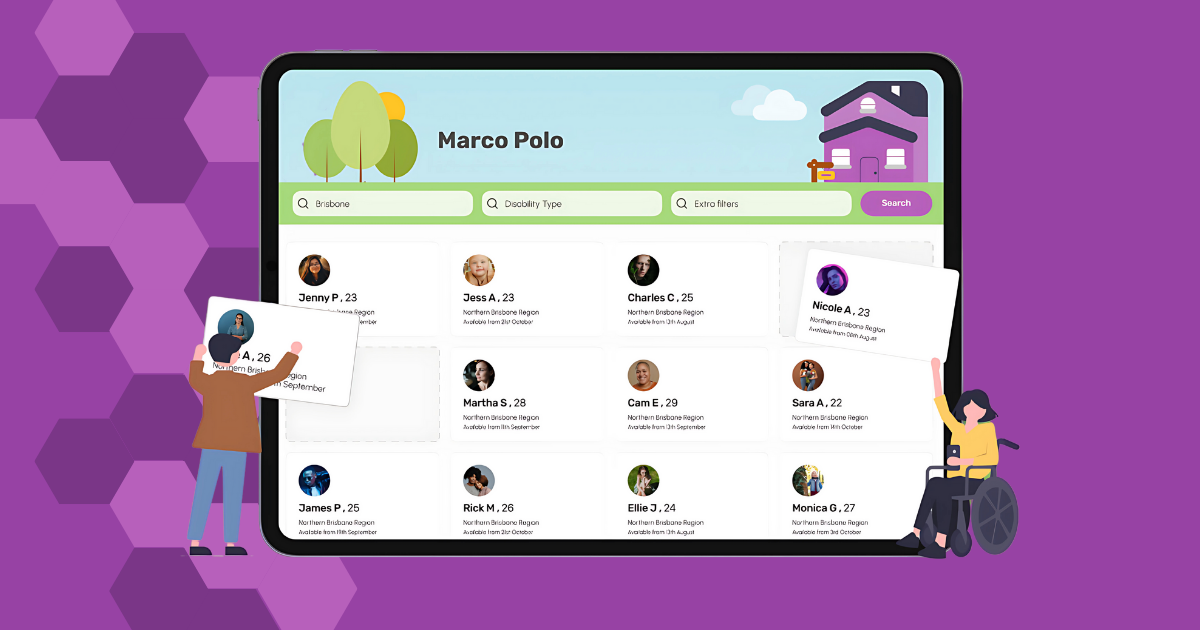
That’s why platforms like Marco Polo exist: to flip the script so participants lead, providers respond, and homes actually work for the people living in them.
What Providers Need to Get Right in Housing
NDIS housing providers need to be in the spotlight when it comes to NDIS participant choice.
If you’re serious about reducing NDIS vacancies in housing and improving outcomes, these are non-negotiables:
Accessibility (Beyond the Basics)
- Step-free access and wide doorways
- Accessible bathrooms (not just grab rails slapped on later)
- Layouts that work for mobility, sensory needs, and shared living
Location That Supports Real Life
- Access to healthcare, community services, and transport
- Proximity to family, work, or social networks
- Opportunities for community participation (not isolation)
Support That Actually Fits
- SIL supports tailored to the participants in the home
- Clear separation between rent, supports, and choice
- Flexibility as participant needs change over time
Communication (The Thing That Breaks Most Placements)
- Clear expectations upfront
- Honest conversations about compatibility
- Ongoing check-ins — not just crisis response
Understanding the Main Types of NDIS Housing Rentals
What Providers Need to Get Right in Housing
NDIS housing providers need to be in the spotlight when it comes to NDIS participant choice.
If you’re serious about reducing NDIS vacancies in housing and improving outcomes, these are non-negotiables:
Accessibility (Beyond the Basics)
- Step-free access and wide doorways
- Accessible bathrooms (not just grab rails slapped on later)
- Layouts that work for mobility, sensory needs, and shared living
Location That Supports Real Life
- Access to healthcare, community services, and transport
- Proximity to family, work, or social networks
- Opportunities for community participation (not isolation)
Support That Actually Fits
- SIL supports tailored to the participants in the home
- Clear separation between rent, supports, and choice
- Flexibility as participant needs change over time
Communication (The Thing That Breaks Most Placements)
- Clear expectations upfront
- Honest conversations about compatibility
- Ongoing check-ins — not just crisis response
Understanding the Main Types of NDIS Housing Rentals
If you ignore that, expect re-placements.
Individual Living Options (ILO):
ILO is flexible by design. Participants might:
- Live with a host
- Live with family or friends
- Design a highly individualised arrangement
ILO works best when participants are genuinely involved in shaping how they live.
Why Housing Portals Matter
Old way: advertise a vacancy and hope for the best.
Better way: match people properly from the start.
NDIS-specific housing platforms do what real estate sites never will:
- Focus on people, not just properties
- Account for support needs, lifestyles, and preferences
- Reduce mismatches before move-in day
What Makes Marco Polo Different
Marco Polo isn’t a listing site, it’s a housemate-first matching platform.
Providers benefit from:
- Participants who want to be there
- Better alignment before placements
- Fewer breakdowns, fewer emergency exits, fewer reputational risks
Participants benefit from:
- Choosing who they live with
- Choosing which providers they engage
- Feeling respected, not placed
That’s how you build stable homes.
What Defines a Quality NDIS Housing Provider (According to Participants)

Participants and families are looking for providers who:
- Respect choice and consent
- Don’t lock people into restrictive or bundled arrangements
- Communicate clearly and honestly
- Separate housing, support, and decision-making
- Adapt when things aren’t working (instead of digging in)
Quality housing providers don’t fear transparency, they benefit from it.
As an NDIS housing provider, take a step back and ask yourself – would I want to be treated the way I treat the people we support? Would I want to live in this home? Would I share with this person who I’m moving into this home?
Common Challenges in NDIS Housing (And How to Avoid Them)
Long Vacancies
Usually caused by poor matching, not lack of demand.
Fix it:
Use NDIS participant-led platforms where people are actively searching and matching.
Housemate Conflict
Often predictable and preventable.
Fix it:
Prioritise compatibility, not convenience.
Rushed Placements
They nearly always fail.
Fix it:
Offer:
- Empty-home inspections
- Virtual tours
- Housemate meet-and-greets (longer than an hour)
- Space for feedback from current tenants
Yes, it takes longer upfront. It saves months (and money) later.
How Marco Polo Is Changing NDIS Housing for the Better
Marco Polo exists because the current system isn’t good enough.
What makes it different:
- Participants lead the process
- Providers can’t pay to jump the queue
- Matching is based on lifestyle, communication style, and support needs
- Providers are vetted, not anyone can list
- It’s like having a housemate hub at your fingertips
The result?
Better matches. Safer homes. Fewer re-placements.
A Smarter Way to Secure the Right NDIS Tenant
Before listing your next vacancy, ask yourself:
- What makes this home work for real people?
- Who would actually thrive here?
- Have current tenants had a say?
Then:
- Price rent competitively and transparently
- List on NDIS-specific platforms like Marco Polo
- Engage early, honestly, and openly
- Treat participants like adults making adult decisions
Because that’s what they are.
Why Choice and Control Aren’t Optional Extras
Choice and control aren’t buzzwords, they’re core NDIS principles.
When participants are involved in housing decisions:
- Placements last longer
- Relationships are stronger
- Homes are safer
- Housing providers build better reputations
Everyone wins.
Final Thoughts on NDIS Housing Rentals That Actually Work
NDIS housing doesn’t have to feel risky, rushed, or reactive.
Whether you’re an NDIS housing provider managing SIL vacancies, offering SDA, or exploring new housing option models, the future is participant-led, transparent, and people-first.
Marco Polo exists to make that future easier to reach, for participants and providers.
Ready to do disability housing differently?
Explore Marco Polo and build homes that actually work.


.png)


Join our newsletter to stay up to date on features and releases.

Marco Polo acknowledges the Traditional Owners and Custodians of Country throughout Australia and recognizes their enduring connection to land, waters, and community. We pay our respects to Elders past, present, and emerging and extend that respect to all First Nations people.
We acknowledge that First Nations people experience disability at a higher rate and face unique challenges within the disability sector. We are committed to listening, learning, and working collaboratively with First Nations communities to support inclusive, culturally respectful services that honor Indigenous values of family, community, and shared care.