Get Orbit free acount only for today, and get your money with refferal code

July 16, 2026
SIL Match: How NDIS Housemate Matching Works (2026 Guide)
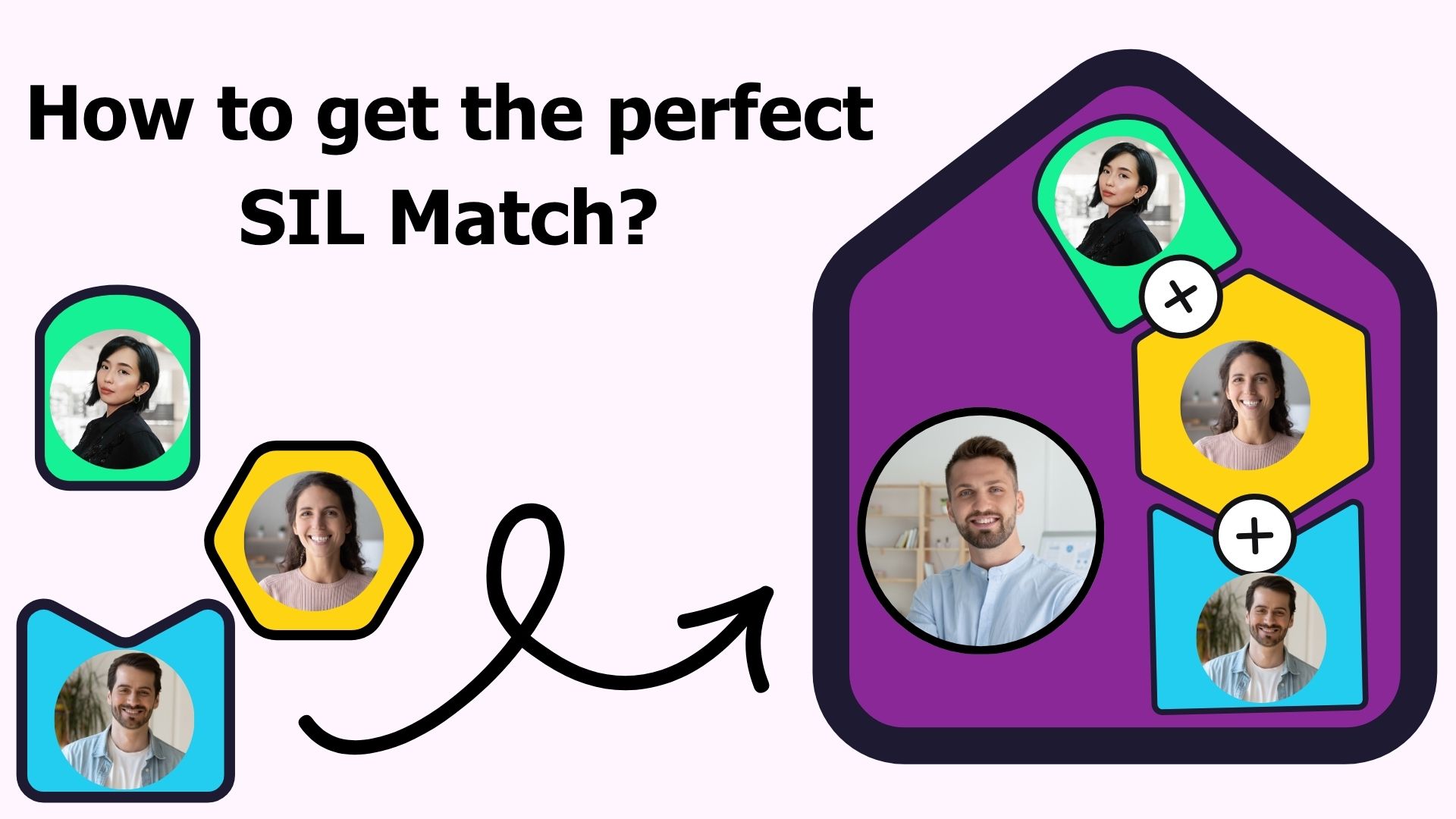
A SIL match is the process of pairing an NDIS participant with compatible housemates, providers, and support arrangements in a Supported Independent Living home. A good SIL match is built on lifestyle compatibility, shared routines, communication styles, and genuine choice, not on whichever bed is empty at the time. Getting the match right is the single biggest predictor of whether a SIL home becomes a stable, long-term home or breaks down within months. This guide explains what a SIL match actually is, why it matters so much, and how to do it well.
This article is for NDIS participants, families, and support coordinators who keep hearing the phrase "SIL match" and want to know what it really means in practice. We'll cover what a SIL match is, why so many SIL placements fail when matching is treated as an afterthought, what a good SIL match looks like in detail, and the practical steps to make one happen. By the end, you'll be able to spot a real match from a placement dressed up as one.
A Tale of 3 Participants
A coordinator I work with had three clients who'd all been in SIL placements for under twelve months and were all in trouble. Not because the houses were bad. The houses were fine. The support workers were fine. The providers were even, on the whole, fine.
The problem in all three was the people. One participant was a quiet early riser sharing with two night owls. Another loved having friends over and was sharing with a housemate who found visitors overwhelming. The third was an introvert placed with someone whose behaviours were dysregulated most evenings.
None of these mismatches were anyone's fault, exactly. Each placement had been made under time pressure, with whoever was available, into whichever bed was empty at the time. The coordinator put it perfectly: "We matched them to a vacancy. We never matched them to each other."
That's the single most important thing to understand about SIL matching. A vacancy and a match are not the same thing. A house can be available, accessible, well-located, and run by a great provider, and still be the wrong home if the people inside don't fit. SIL matching is the work of getting the people right, before everything else flows from there.
What a SIL match actually means
The phrase gets used a few different ways, so let's pin it down.
A SIL match is the alignment of three things that have to work together for a Supported Independent Living arrangement to be a real home:
- Housemate compatibility. The other people who live in the house and share the support worker with you. This is the most important part of the match, and the part most commonly treated as an afterthought.
- Support arrangement fit. The provider, the workers, the support ratio (1:1, 1:2, or 1:3), and the rostered hours actually match the participant's needs and preferences.
- House fit. The dwelling itself, the location, the accessibility features, the neighbourhood, and the room work for the participant.
When all three line up, you have a SIL match. When one of them is forced because the others got priority, you have a placement.
In current NDIS practice, the third element (the house) usually gets prioritised first, because that's where vacancies happen. The second element (the support) usually gets prioritised second, because that's what the provider quotes for. The first element (the housemates) usually gets prioritised last, even though it's the one that most predicts whether the home works. Good SIL matching reverses that order. You start with the people, then bring the support around them, then bring the house.
Why SIL matching matters more than most people realise
Three reasons, and they all compound.
The 1:3 ratio makes compatibility critical. Post-NDIS Review, in-home SIL is increasingly delivered at a 1:3 staff-to-participant ratio. That means three participants sharing one worker for in-home support. A 1:3 ratio is efficient and works beautifully when the three people in the house genuinely fit. With incompatible housemates, the same ratio becomes a daily source of friction. Three people sharing one worker is intimate. There's no escape valve. Compatibility isn't a nice-to-have. It's the whole foundation.
Tenancy breakdown is expensive in every way. When a SIL placement falls apart, the costs are huge. The participant is destabilised, often returning to the family home or short-term accommodation. Behaviours can escalate. Hospital admissions can increase. The other housemates may also be displaced if the house is no longer viable. The provider loses revenue. The system carries the cost of finding the next placement, which is often made under exactly the same time pressure as the first one. A bad match isn't just emotionally awful, it's financially catastrophic for everyone in the chain.
Real Choice and Control depends on it. Choice and Control is written into the NDIS Act 2013. It's the legal foundation of the scheme. A participant who's been placed into a vacancy hasn't really exercised choice over who they live with, even if they technically said yes to the arrangement. A real SIL match, where the participant has met potential housemates, spent time with them, and chosen the arrangement deliberately, is what Choice and Control actually looks like in housing.
What a good SIL match looks like
Let's get concrete. A genuinely good SIL match involves the participant and a set of potential housemates being compatible across several specific dimensions.
Daily rhythm. Wake-up times, bedtime, meal patterns, weekday vs weekend routines. Early risers and night owls under one roof in a 1:3 arrangement is a slow-motion problem.
Energy and social style. Some participants thrive in lively households with visitors and noise. Others need calm and predictability. Both are valid; mismatching them is the issue.
Communication and conflict style. How do people in the house raise issues? How do they handle disagreement? A direct communicator sharing with a conflict-avoidant housemate creates resentment in both directions over time.
Support needs profile. Are the participants in the house on broadly similar support intensities? Wildly different support profiles (one person needing 1:1 active support, another needing only check-ins) create tension and often mean the staffing model doesn't really work for either.
Interests and shared space behaviour. Cooking habits, cleanliness standards, hobbies that take up communal space, music, TV preferences. Small things, but they're the texture of daily life.
Deal-breakers. Smoking, pets, gender preferences, religious or cultural considerations, overnight guests, support workers in shared spaces. Named up front, deal-breakers protect everyone.
Goals and life direction. Two participants both working on independence skills will support each other in a way two people on very different trajectories won't.
A platform or coordinator doing real SIL matching asks about all of these, structures the matching around them, and only moves to the question of houses and providers once the people fit. A platform that asks about none of these and just shows you vacancies is, with respect, not doing SIL matching at all.
How to do SIL matching properly
A practical sequence, in the order that gives you the best chance of a real match.
Start with the participant's profile. Before looking at any houses, work out who the participant is, what they need, what they want, what they won't tolerate. Be specific. Vague profiles produce vague matches. If the participant communicates differently, use whatever tools they use to express preferences; the goal is their voice in the profile, not yours.
Identify potential housemates. This is the work most placements skip. A purpose-built SIL matching platform like Marco Polo Portal makes this systematic, by letting participants build structured profiles and surfacing genuine compatibility matches. Existing networks (day programs, supported employment, sports and recreation groups, school and therapy connections) are also a real source of potential housemates because the compatibility data is already in your real-world relationships. Family and friends-of-friends sometimes turn up the right match too.
Spend time together before committing. Coffees, meals, weekend activities, a short stay if possible. Six conversations beats one meet-and-greet every time. You're not just confirming the surface-level fit, you're testing communication, energy, deal-breakers, and the small habits that show up only after a few hours together.
Bring the support arrangement around the matched group. Once two or three people have matched, you approach a provider as a pre-formed group, with your support needs and preferences already understood between you. This is the reverse of being placed into a vacancy. It's the participants choosing the provider, not the provider choosing the participants.
Find the right house last. With matched people and a confirmed provider, the house is now the easiest piece to solve. Accessibility, location, size, design. You're picking a building to suit the people, rather than picking people to fill the building.
This order is the whole game. People first, support second, house third. Every step you reverse this order, you weaken the match.
If you want to find out how many people you might need to share with check out our Support Calculator
What to look for in a SIL matching service
If you're using a platform, a coordinator, or any matching service to help with a SIL match, here's what tells you whether it's doing the job properly.
Does it ask about the right things? Lifestyle, routines, communication, deal-breakers, interests, support needs. If the only data being collected is location, gender, and disability type, the matching is going to be shallow.
Is it independent? A matching service that's owned by, or commercially tied to, a particular SIL provider has a structural incentive to point you toward that provider's vacancies. Genuine SIL matching needs to happen outside any one provider's pipeline. Ask directly who owns the platform and whether it shares ownership with any provider.
Does it put the participant at the centre? Some platforms are built around the provider's needs (filling vacancies, listing rooms). Some are built around the participant's needs (finding compatible people first). Both can be useful tools, but they're not the same job. For a SIL match in the proper sense, you want the participant at the centre.
Does it support the participant's voice? Matching only works if the participant's actual preferences are in the profile. A platform that allows families and coordinators to support profile creation, while keeping the participant's choices at the centre, is doing it right.
Can it handle the housemate-first model? Some platforms only let you see vacancies. The ones built for SIL matching let you see and connect with other participants before any provider is in the picture, so you can form a matched group and then approach a provider together.
If a service ticks these boxes, it's doing real SIL matching. If it's mostly showing you property listings and provider profiles, it's doing something else (also useful, just different).
How does Marco Polo Work for Participants?
Who SIL matching is for
A SIL match isn't only for people about to move into a new house. The matching mindset applies to several situations.
Participants moving out of the family home for the first time. The most important time to get matching right, because the foundation gets set here. Starting the matching work years before the move (not weeks before) gives you the time and pool to actually find the right people.
Participants changing SIL providers. When a current SIL arrangement isn't working, the temptation is to jump into the first available vacancy with a new provider. This is exactly when re-matching properly matters most. Don't repeat the placement logic that caused the original problem. check out our guide on changing SIL Providers
Participants whose housemate situation has changed. A housemate has moved out, a new one needs to come in, and the house dynamic is in flux. Matching the incoming person well preserves what was working for everyone else.
Coordinators managing multiple participants. A coordinator with several clients looking for housing can use matching tools to see compatibility across their caseload. Sometimes the right match for one client is another client.
Providers building new houses. A provider planning a new SIL house can use matching to find a pre-formed group of compatible participants, rather than filling beds one at a time and hoping it works. The provider's vacancy days drop, and the house starts with a better foundation.
All of these are SIL matching. The principle is the same in each: people first.
Frequently Asked Questions
What is a SIL match?
A SIL match is the process of pairing an NDIS participant with compatible housemates, a suitable support arrangement, and the right house for a Supported Independent Living home. A good SIL match starts with housemate compatibility and works outward to the support and the dwelling, rather than placing a participant into whichever vacancy is available.
Why is SIL matching so important?
Because in a shared SIL home, especially under the 1:3 staff-to-participant ratio that's now common, the people sharing the house with you shape your daily life more than anything else. Incompatible housemates make beautiful, well-supported houses unliveable. Compatible housemates make modest, ordinary houses into real homes. Most SIL tenancy breakdowns can be traced back to poor matching at the start.
Who can use a SIL matching service?
NDIS participants, their families and supporters, and support coordinators can all use a matching service. Marco Polo Portal also supports providers who want to advertise vacancies framed around the existing housemates rather than just the building, so a participant looking at a Marco Polo vacancy sees who already lives there.
How is SIL matching different from finding a SIL vacancy?
A SIL vacancy is an empty bed in an existing house. A SIL match is the alignment of compatible housemates, the right support arrangement, and the right house. You can fill a vacancy without anyone being matched, and that's how a lot of placements happen, and a lot of placements fail. Real SIL matching starts with the people.
Is SIL matching the same as housemate matching?
Housemate matching is the most important part of SIL matching, but the full SIL match also includes the support arrangement (provider, ratio, rostered hours) and the house. In a Supported Independent Living context, you can't really separate these out completely, because the support and the housemates affect each other directly.
How long does a good SIL match take to set up?
Months, not days. Building profiles, identifying potential housemates, meeting them, spending time together, choosing a provider, choosing a house. Trying to compress this into weeks is the exact pressure that produces vacancy-driven placements. Start early so you can take the time the matching actually needs.
Does my support coordinator do SIL matching?
A good independent support coordinator can play a major role in SIL matching by helping you build a profile, identifying potential housemates from their network, coordinating meetings, and supporting the move to a provider. A coordinator who works for a SIL provider has a structural conflict of interest in this work, because their employer's vacancies will quietly weight the suggestions. Independent matching is cleaner.
Where can I do SIL matching?
Marco Polo Portal is purpose-built for SIL matching and brings together participants, support coordinators, and providers. It's $97 per year for participants, non-renewing, and usually claimable through your NDIS plan, with a soft "check with your plan manager or coordinator" worth doing. Informal networks (day programs, supported employment, community groups) also produce real matches and are worth tapping into alongside any platform.
Can a provider do SIL matching for me?
A provider can suggest matches from among their existing participants, but the structural incentive is to fill that provider's vacancies. This isn't necessarily bad, and some providers do a thoughtful job of it. But the matches you're shown will be drawn from inside the provider's own pipeline, which isn't the same as choosing from the wider pool of potential housemates. Use provider-led matching as one input, not the only one.
What if I live rurally and the pool of potential matches is small?
This is a real challenge in regional and remote areas, and the smaller pool is genuinely the limiting factor. Combining a matching platform with informal networks (day programs, sporting clubs, community groups) widens the pool. Considering a slightly larger nearby town can also help. Starting early matters even more in rural matching, because the smaller pool means the right person may take longer to find.
Your home. Your housemates. Your call.
A SIL match isn't a luxury or a nice-to-have. It's the foundation that everything else in a Supported Independent Living arrangement rests on. The houses, the workers, the supports, the routines, they all work or fail depending on whether the people inside the house actually belong together. Get the match right, and the rest becomes much easier. Get it wrong, and no amount of provider quality can patch over it.
If you're ready to do SIL matching the way it should be done, with the participant at the centre and compatible housemates found first, Marco Polo Portal is built for exactly that. It's $97 a year for participants, non-renewing, and usually claimable through your NDIS plan. If you're a support coordinator working on matches for your clients, our coordinator page has the tools to make the work easier and reduce mismatches across your caseload. And if you're a SIL or ILO provider who'd rather receive a pre-matched, compatible group of housemates than fill a vacancy from a list, our provider page is built for you.
Your home. Your housemates. Your call. Always.
About the Author


Aaron Cotton
Aaron Cotton didn't set out to work in disability housing, he was a pharmacist who stumbled into a system so broken he couldn't look away. What he found was simple and unacceptable: people with disability are often denied a choice most of us take for granted, like who they get to live with.
So he set out to fix it. Aaron co-founded Marco Polo Portal, a platform that gives that choice back, after building Acorn Homes, a Supported Independent Living provider grounded in the same idea, not just talking about empowerment, but actually handing people control. His work has earned the Innovation Award at the Disability Leadership Institute and a place in Remarkable Tech's accelerator.
Aaron is a QDN Engage Consultant and a council member with the NDIS Quality and Safeguards Commission, but for him the real driver has always been community impact: real people having real choice. A straight-talker by nature, he writes for anyone ready to reimagine what disability housing can, and should, look like.


.png)


Join our newsletter to stay up to date on features and releases.

Marco Polo acknowledges the Traditional Owners and Custodians of Country throughout Australia and recognizes their enduring connection to land, waters, and community. We pay our respects to Elders past, present, and emerging and extend that respect to all First Nations people.
We acknowledge that First Nations people experience disability at a higher rate and face unique challenges within the disability sector. We are committed to listening, learning, and working collaboratively with First Nations communities to support inclusive, culturally respectful services that honor Indigenous values of family, community, and shared care.